The way people search online is changing fast. Instead of typing short keywords, users are now speaking naturally to their devices—asking questions, giving commands, and expecting instant answers. With the rise of voice assistants like Google Assistant, Siri, and Alexa, voice search is no longer a future trend—it’s already shaping how businesses must approach SEO.
If you want to stay ahead, your digital marketing strategies need to adapt. In this blog, we’ll break down practical, actionable voice search SEO tips to help your website rank better and attract more traffic in 2026.
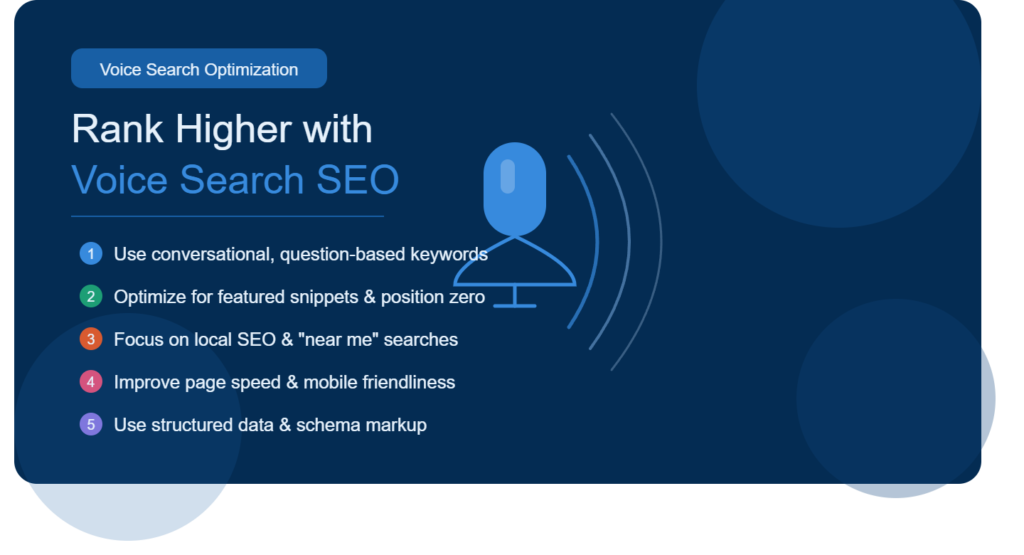
What is Voice Search SEO?
Voice search SEO is the process of optimizing your content so it appears in results when users speak queries instead of typing them.
For example:
- Typed search: “best cafes Kerala”
- Voice search: “What are the best cafes near me in Kerala?”
Notice the difference? Voice searches are:
- More conversational
- Longer (long-tail keywords)
- Often question-based
Why Voice Search Matters in Digital Marketing Strategies
Voice search is growing rapidly because:
- Smartphones are everywhere
- Smart speakers are becoming common
- People prefer convenience and speed
Key impact on your strategy:
- More focus on natural language content
- Increased importance of local SEO
- Need for quick, direct answers
If your digital marketing strategies don’t include voice optimization, you’re missing a major opportunity.
1. Focus on Conversational Keywords
Traditional SEO focuses on short keywords. Voice search focuses on how people actually speak.
Instead of:
- “digital marketing Kerala”
Optimize for:
- “What are the best digital marketing strategies for small businesses in Kerala?”
Tips:
- Use long-tail keywords
- Include question phrases like:
- How
- What
- Why
- Where
This aligns perfectly with how voice assistants process queries.
2. Optimize for Featured Snippets
When users ask a question via voice, devices often read out a single answer—usually from a featured snippet.
To rank here:
- Answer questions clearly
- Keep answers within 40–60 words
- Use bullet points or short paragraphs
Example:
Question: What are digital marketing strategies?
Answer: Digital marketing strategies are planned methods businesses use online to promote products, attract customers, and increase sales using channels like SEO, social media, and ads.
Clear, concise answers increase your chances of being selected.
3. Prioritize Local SEO
Voice searches are often location-based:
- “Near me”
- “Open now”
- “Best in Kerala”
What to do:
- Optimize your Google Business Profile
- Add your location in content
- Use local keywords like:
- “digital marketing strategies in Kerala”
- “SEO services near Perumbavoor”
Why it matters:
Voice assistants prioritize local results, especially for service-based businesses.
4. Improve Website Speed
Voice search users expect instant results. If your site is slow, you lose rankings.
Improve speed by:
- Compressing images
- Using fast hosting
- Minimizing code
A fast site = better user experience + better SEO performance
5. Make Your Website Mobile-Friendly
Most voice searches happen on mobile devices.
Ensure:
- Responsive design
- Easy navigation
- Fast loading on mobile
Google prioritizes mobile-friendly websites in rankings, making this essential for your digital marketing strategies.
6. Use Natural Language Content
Write like you speak.
Instead of:
- “Best digital marketing strategies 2026”
Try:
- “What are the best digital marketing strategies to grow your business in 2026?”
Tips:
- Use simple language
- Avoid robotic keyword stuffing
- Write in a conversational tone
This matches how voice queries are phrased.
7. Create FAQ Sections
FAQ sections are gold for voice SEO.
Example:
Q: What are digital marketing strategies?
A: Digital marketing strategies include SEO, content marketing, social media, and paid advertising used to grow a business online.
Benefits:
- Targets question-based searches
- Increases chances of ranking for voice queries
- Improves user experience
8. Use Structured Data (Schema Markup)
Structured data helps search engines understand your content better.
Add schema for:
- FAQs
- Reviews
- Business information
This increases your chances of appearing in voice search results.
9. Focus on Search Intent
Understanding why someone is searching is key.
Types of intent:
- Informational: “What are digital marketing strategies?”
- Navigational: “Digital marketing agency near me”
- Transactional: “Hire SEO expert Kerala”
Match your content to user intent for better rankings.
10. Optimize for “Near Me” Searches
Voice users often look for nearby services.
Include:
- Location keywords
- Business address
- Contact details
Example:
- “Best digital marketing strategies for businesses in Perumbavoor”
This helps attract local clients.
Pro Tips to Upgrade Your Digital Marketing Strategies
- Combine voice SEO + local SEO for maximum impact
- Regularly update content with new trends
- Use analytics to track voice search performance
- Create content that answers real user questions
The Future of Voice Search
Voice search will only grow stronger with AI advancements. Businesses that adapt early will gain a major advantage.
In the future:
- More users will rely on voice instead of typing
- AI assistants will become smarter
- Personalized voice results will increase
Your digital marketing strategies must evolve accordingly.
Conclusion
Voice search is not just a trend—it’s a fundamental shift in how people interact with the internet. By optimizing your content for conversational queries, focusing on local SEO, and improving user experience, you can stay ahead of competitors.
If you want to succeed in 2026 and beyond, integrating voice search into your digital marketing strategies is essential.